


The American International University in the United States welcomes you to the first course held in Sulaymaniyah Governorate, Kurdistan Region of Iraq, in collaboration with the International Organization for Human Rights, titled How Leadership is Made”! We are excited to have you participate in this inspiring experience.
زانکۆی نێودەوڵەتی ئەمریکی لە ئەمریکا بەخێرهاتنتان دەکات بۆ یەکەم خول کە لە پارێزگای سلێمانی بە هاوکاری ڕێکخراوی نێودەوڵەتی بۆ مافەکانی مرۆڤ بەڕێوەچوو، بەناونیشانی چۆن سەرکردایەتی دروست دەکرێت”! ئێمە زۆر خۆشحاڵین کە ئێوە بەشداری لەم ئەزموونە ئیلهامبەخشەدا بکەن.
We extend a warm welcome to all participants in our sutotanding course “How Leadertship is Made, where we will explore together a unique journey to develop and enhance leadership skills.
The Leadership Development Program is a training program that helps you evolve your leadership style and acquire the necessary skills to master the art of leadership and management successfully. This includes motivating, inspiring, and guiding others. Learn how to become an outstanding leader for your team, your children, or your employees by applying a set of successful skills and methods used by the world’s best leaders.
In this course, we will stand together at the gates of a deep understanding of leadership and its arts. We will strive to provide a positive learning environment that encourages active participation. Our goal is to deliver rich and inspirational content that enables you to develop leadership skills and stimulates creative thinking.
This course will embody an opportunity to build strong communication and experience-sharing among participants. We hope that this experience will be a starting point for making a positive impact on your personal and professional paths.
We look forward to an inspiring learning journey and enriching your experience in “How Leadership is Made”!
The Leadership Course, in strong collaboration with the International Organization for Human Rights (USAGHR), the American Institute for Diplomacy and Capacity Development (AIDC), and the American International University (AIUE). We shed light on the importance of leadership and its impact in the workplace and society. “Leaders Make” embodies the idea of developing leadership to face challenges. True leadership emerges in adversity, where individuals shoulder responsibility effectively.
The course aims to enhance leadership skills for individuals, regardless of their backgrounds, opening up new horizons. It fosters participants’ understanding of contexts that require leadership and encourages them to take on responsibility. An opportunity to acquire leadership and influence skills, motivating participants to make a positive impact in their personal and professional lives.
Definition of leadership Leadership is defined as the ability to motivate and arouse the interest of a group of individuals, and to unleash their energies towards achieving the desired goals with all effectiveness and enthusiasm. Leadership can also be defined as the ability that distinguishes a leader from others by directing others in a way that can gain their obedience, respect, and loyalty, and sharpen their motivation. And creating cooperation between them in order to achieve a goal in itself, [1] Linguistically, the word leadership comes from the verb led to lead, to lead, to lead, and to lead, so he is a leader, and the object is led, meaning he walked in front of him and directed him and managed his affairs. [2] Leadership is related to many fields around the world. For example, one of the fields may be the leadership of society, religion, politics, and election campaigns. Therefore, leadership can be considered an art form that makes people do the things that the leader wants because they really want to do them. It also includes Leadership sometimes makes difficult and sound decisions, but these difficulties can be overcome by creating a clear vision to achieve goals.
leadership styles There are many leadership styles , and it is not necessary for all leaders to be similar, but the best leader is the leader who is familiar with all styles and is able to deal with the largest possible number of issues, regardless of their styles.
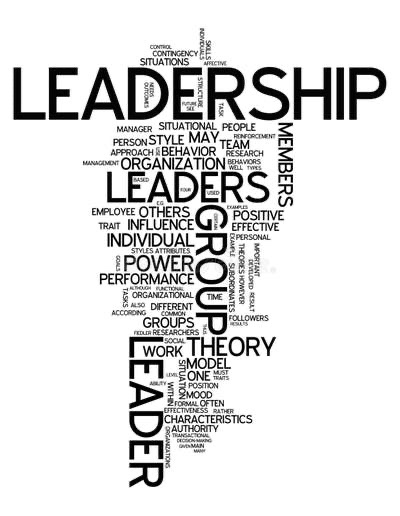
The most famous of these styles are the six leadership styles by Daniel Goleman, which are as follows: [5] A domineering or coercive leader: He follows the method of immediately obeying orders, and this method is summarized by the phrase (Do what I tell you). Role model leader: He is characterized by his ability to smoothly self-direction and is summarized by the phrase (Do as I do, now).
Trustworthy leader: He is characterized by excessive self-confidence and is summarized by the phrase (Come with me). Harmonious Leader: Follows the phrase “people come first.” Democratic Leader: Leaders of this style constantly ask (What do you think?). Trained leader: His leadership style is summarized by the phrase
Leadership in business is the ability of a responsible person in the company to manage employees at all levels within the company, and manage materials within the company through planning, organizing, directing, and motivating in ways that ensure everyone’s commitment to the goal of achieving the desired goals in a way that reflects the company’s culture. People are usually in charge of Pioneers in leadership in the business world, executive positions; Such as CEO , chief operating officer, chief financial officer, etc. [6] Traits of an effective leader An effective leader is defined as a person who has the ability to motivate and direct individuals and seeks to train them in order to achieve goals and move towards an inspiring future vision for team members and make it a reality. [7] An effective leader is characterized by several characteristics, the most important of which are the following: [4] Self-confident, persistent, and able to confront difficulties and failed attempts. Able to communicate and interact strongly.
Creative and innovative. Wise and reactive in times of crises. Able to keep up with changes, open-minded, and risk-loving. He is capable of insight and speculation about things, and is characterized by intelligence and acumen. [8] Objective, humane, strong-willed and knowledgeable about the work. [8]
The difference between a leader and a manager Most people confuse the concepts of leadership and management .
The manager is the one who manages, organizes and coordinates the various economic resources in a business. Some differences between a leader and a manager can be noted in the following table:
The topics that will be students
Axis 1: Management vs. Leadership
- This axis focuses on the differences between management and leadership functions. It explores the mental models used by leaders and how leaders should apply them. Finally, in this axis, you will learn the nature of SMART goals, how to set them, and why leaders need to be part of the 8% of people who achieve their goals.
Axis 2: Managerial Competencies/Abilities and Their Importance
- This axis focuses on the difference between skills and competencies/abilities. In this axis, you will delve into a review of the key competencies/abilities of a leader, explore best practices to be used, and how to develop competencies/abilities. We will also review different types of leaders and famous examples that leaders/managers can learn from.
Axis 3: Why Leadership is Crucial in the Workplace?
- This axis explores why leadership makes a difference in work and in life. Leaders need to understand the impact of leadership as well as the impact of negative leadership. You will explore the key dimensions of leadership and the methods that need to be worked on to become a successful leader. The axis also delves into how leaders can lead with firmness and humility.
Axis 4: What Type of Leader Are You?
- In this axis, you will build on your knowledge from the previous three topics and delve into different types of styles that leaders can adopt. You will thoroughly understand the difference between transformational leadership and situational leadership.
Axis 5: Fundamental Principles of Leadership Every Leader Should Know
- This training axis aims to give leaders the necessary skills to lead their teams. It will focus on how to be a respected manager or leader and will also look at how to build trust with your team and maintain it. Finally, the axis will review how managers and leaders can take responsibility and lead courageously.
Axis 6: The Leader and Their Role in Creating a Positive Work Culture
- Organizational culture is one of the most important aspects of any company. This axis focuses on giving leaders the tools needed to manage the internal culture of the company. It explores the impact of culture and leadership, how to change the company’s culture, and how the leader can set the company’s message and vision that achieves success based on a positive internal culture.
Axis 7: The Leader and Promoting Diversity
- Managing diversity is a key managerial and leadership competence. This axis examines the meaning of diversity and how to manage diversity effectively. It also explores the challenges leaders face when managing diversity.
Axis 8: Leaders and Promoting Innovation and Creativity
- This axis explores leaders’ need to understand the role of innovation and creativity in the workplace. This axis will give leaders the necessary skills to promote innovation and creativity in the workplace. Finally, it reviews the importance of knowledge sharing and collaboration.
Axis 9: The Leader and the Art of Communication
- Communication skills have become more important than ever. This axis reviews the importance of communication in the workplace, followed by the key communication tools for managers and leaders, and the necessary skills for effective presentation.
Axis 10: The Leader and Understanding Different Personality Types
- People management is essential for any manager or leader. This training axis will delve into the different management and leadership styles needed to manage open and introverted individuals. The perception theory will be explored to understand how managers and leaders think. Finally, the importance of managing bias will be defined.
Axis 11: The Leader and Motivating and Inspiring Others
- Leaders know that they cannot succeed or achieve goals without motivating and inspiring others and guiding them. In this training axis, we will review the importance of motivation and its methods. We will explore how the leader can inspire their team and guide them accurately toward goals.

The difference between entrepreneurship and leadership
Entrepreneurship and leadership intersect in many ways, but each has meaning and characteristics that make the two concepts separate from each other.
Entrepreneurship is related to the qualities that the entrepreneur possesses , and he exploits them in establishing his companies.
As for leadership, it is the process of influencing people and providing an appropriate environment for them to achieve the desired goals.
We can say that leadership is more comprehensive than entrepreneurship.
It can be said that entrepreneurship falls under leadership, and not the other way around, and in this article we will talk about the difference between entrepreneurship and leadership in the concept, goals, and skills that fall under each of them.
The difference is in the concept The following is the definition of entrepreneurship and leadership:
[1] Definition of leadership: It is the capabilities that a person possesses that enable him to face challenges in a more rational manner, create new ideas that can be applied, such as development projects, innovate practical solutions to the problems he faces, and try to transform problems into practical and useful ideas.
Definition of leadership:
It is one of the most important innate qualities through which a person influences a specific group by directing them towards a specific goal that he defines as a leader.
He has arguments and proofs that help him prove his ideas and means.
This person is able to gain the love and belonging of people to the place in which they work, and they believe in By achieving the goal, they unite for that.
The difference in goals Here is the difference between entrepreneurship and leadership: [2] Leadership goals Enhancing the readiness of
the work environment in order to implement the organization’s entrepreneurship plan. Striving to create new projects. Encouraging and supporting innovation, initiatives and ideas for any employee in the organization.
It contributes to developing administrative capabilities by studying a specific project, identifying its alternatives, comparing the alternatives in terms of costs and benefits, and choosing the best alternative.
It is considered a means of economic development . By supporting innovation, developing skills, and maximizing production. Leadership goals It links the working class with the organization’s goals, plans, and future visions.
It contributes to directing employees’ efforts towards achieving goals. It helps train, develop and develop the efforts of the organization’s employees.
It controls the obstacles and challenges that limit the achievement of goals, and works to find solutions to deal with them. Stimulates individuals’ abilities, practical and humanitarian skills. Skills that fall under the concepts of entrepreneurship and leadership The following skills fall under it:
[3] Leadership skills Flexibility time management Empathy Self-denial fast learning Mutual respect with others Driving skills Personal skills, such as self-management, developing his personality, learning from mistakes. Human skills, such as the ability to work with and through people. Management skills, such as seeing the organization as a whole and the ability to manage all relationships. Professional or technical skills, such as specific tasks and specialized knowledge.
Problem solving skills . Decision making skill. The art of motivating employees

Definition of goal
Goal concept There are many definitions for the goal, including the following: [
1] It is what the individual strives to achieve.
The goal is a practical end, a theoretical beginning to achieve the desired goal .
The goal is the one that guides the individual’s behavior. It is what satisfies the motivation and towards which the behavior is directed .
It is usually something external.
A goal is the decisive result that an individual seeks.
The educational definition of the goal is that which leads, directs, and guides voluntary behavior for the purpose of reaching and achieving the endeavour.
Without that leadership, and that guidance and guidance for action and movement, human work would be stumbled and in chaos, and behavior would no longer achieve a specific desired goal, and activity and effort would mean nothing. Then the activity and its absence are equal in value, or the behavioral process becomes a routine and traditional mechanism from which no significant benefit is expected.
Certainly, that work in the end does not lead the person or society to any significant intellectual, cultural, or civilizational change or development – as happened. In primitive education – this is on the grounds that purposeful and intentional education is the recommended tool, and it is agreed upon that it is the best and most reliable for intellectual and cultural change for the individual and the group, and serves the purposes of society well – and the school is the only traditional institution established by society to act on its behalf in raising and educating its children.
There is no other social institution that plays this role, unless we exclude the role of the family in education.
Objective conditions The most important conditions for the goal are the following:
The time must be specific.
To be realistic. Realizable. Specific and measurable, for example I want to earn one hundred riyals.
Aim for everything great and high. The purpose and immediate goal that leads to the goal;
The goal is the distant goal, and the goal is the near goal. Success equation It is your way towards knowing the appropriate goal for you. It has been collected in the word SWOT.
Please bring a piece of paper and divide it into four sections, then follow the following instructions:
Put in the first box your strengths and your life. Put your weak points in the second box. Put in the third box the opportunities available to you now and in the future.
Put in the fourth and final box the threats that you are likely to encounter as well, and from here you will begin the process of determining priorities in your life, and then choosing the appropriate goal for you.
What is the meaning of goal

Definition of goal A goal is a measurable and observable end result by performing certain tasks within a specific period of time. [
1] It is an aspiration and effort of a person, or a desired result for him. [
2] It is also the action that clarifies what a person wants to achieve, or what others are required to achieve.
[3] Types of goals There are two types of goals: [4] Short-term goals: These are the goals that are to be achieved in the near future, and range between one day to a year, such as: taking an educational course, and buying a new television.
Long-term goals: These are goals that are to be achieved in the distant future, require time and planning, and take more than a year to achieve, such as: building a special project and graduating from university
How to achieve goals There are many steps that help achieve the desired goals, including
Writing a list: First, the goals must be set, by setting only three minutes during which the person writes down his goals without worrying about the difficulty of achieving them, then go back and search for the changes that must be implemented or modified in his lifestyle to facilitate the process of achieving the goals .
This paper must not be neglected, but rather Refer to it regularly
. Maintaining a clean work environment: Chaos is not only a physical hindrance, but it has been scientifically proven that it distracts the individual, and one must think about its mental impact and not only the physical impact.
Therefore, things that distract one’s mind from achieving the goal must be kept away, and one must think about whether these things inspire him to achieve his goals, or distract him.
Reducing other types of distractions: It is not enough to remove distractions from the work environment alone, but the person must remove other distractions to be able to accomplish the goal.
Such as notifications on social media, personal phone calls, unnecessary appointments, and developing a plan to complete the work.
Waking up early:
It is possible to program the body to wake up early at the same time every day, and this takes some time to get used to, but it will give the person time to complete the tasks he needs to achieve goals without distractions.
Take advantage of the weekends:
It is important to take a rest on the holidays, but it is possible to take a little time to plan for the next week.
Stop postponing and procrastinating:
This can be achieved by trying the fifteen-minute rule, by setting a period of fifteen minutes and committing to carrying out a postponed task within it.
Finding people to help:
Having people who can inspire and encourage perseverance helps in achieving success; Therefore, one must look for people who can bring the person closer to his goal.
Playing the role that the person wants to achieve:
The person must think about the new personality that he would like to achieve, and he can learn from others by leaving an impression that reflects the individual’s true aspirations, which will likely be followed by success.
Make periodic recordings of progress: One must evaluate oneself if one is on the right path to reaching the goal, especially if the goal is time- bound .
Motivating oneself with rewards:
It is good to reward oneself when small tasks that lead to the goal are achieved in a way that makes the individual happy, which creates an incentive for the person to continue in the long term.

 AMERICAN INTERNATIONAL UNIVERSITY